Introduction
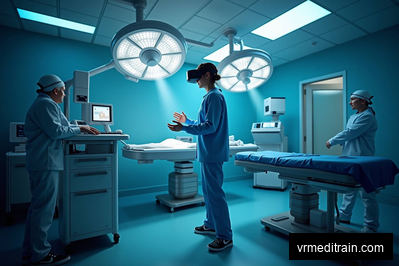
The advent of virtual reality (VR) has dramatically revolutionized various sectors, including healthcare. It's no surprise that VR has found its way into the operating room, where it's enhancing surgical precision and ultimately improving patient outcomes. The significance of VR in surgical procedures is multi-faceted, and its impact is profound.
In the following sections, we delve into specifics of how VR is transforming surgical precision and patient outcomes, including examples, statistics, case studies, and expert perspectives.
As we delve deeper into the realm of virtual reality (VR) in our introductory exploration, it becomes evident that this technology is not merely a trend but a transformative force reshaping entire industries. Take, for instance, the healthcare sector, where VR is being harnessed to enhance medical training, patient care, and even therapy sessions. The immersive nature of VR simulations allows medical professionals to practice complex procedures in a risk-free environment, ultimately improving their skills and confidence. Furthermore, patients can benefit from VR experiences that reduce anxiety levels during treatments or provide therapeutic distractions. This dynamic evolution underscores the profound impact of VR in revolutionizing traditional practices.
VR and Surgical Training
VR technology provides an immersive, interactive environment for surgical training. It allows surgeons to practice complex procedures in a controlled and risk-free setting. According to a study published in the Journal of Surgical Education, VR surgical training improved performance by 230% compared to traditional methods.
For instance, the Stanford University School of Medicine uses VR technology to train neurosurgeons. Through simulation, the trainees can practice removing brain tumors, allowing them to hone their skills and increase precision before performing surgery on actual patients.
Innovative applications of VR in surgical training continue to revolutionize medical education. Beyond simulating surgical procedures, VR technology now enables trainees to practice complex surgeries in virtual operating rooms, replicating real-life scenarios with remarkable accuracy. For instance, platforms like Osso VR provide detailed modules that allow users to perform procedures step by step, receiving instant feedback and guidance. This hands-on experience enhances skill development and confidence in aspiring surgeons, bridging the gap between theory and practice. As VR simulations become increasingly sophisticated, the potential for improving surgical outcomes through immersive training experiences grows exponentially.
VR in Preoperative Planning
VR aids in visualizing the patient’s anatomy in a three-dimensional space, offering surgeons a clear understanding of the complexities involved before the actual surgery. A study by the World Journal of Surgery found that preoperative planning using VR led to a 40% reduction in operation time and a 25% decrease in surgical complications.
A case in point is the successful separation of conjoined twins at Children’s Hospital of Philadelphia in 2017. Surgeons used VR technology to create a 3D model of the twins' shared heart, which was instrumental in planning and executing the complex surgery.
In addition to visualizing anatomy, VR technology in preoperative planning has revolutionized surgical simulations. Surgeons can now practice complex procedures in a risk-free virtual environment, enhancing their skills and confidence before entering the operating room. For instance, orthopedic surgeons can use VR to simulate joint replacement surgeries, allowing them to plan the precise placement of implants and anticipate potential challenges. This advanced level of preparation not only improves surgical outcomes but also reduces the likelihood of complications during the actual procedure.
VR in Intraoperative Navigation
VR technology is playing a critical role during surgery as well. Surgeons use VR headsets to navigate through the patient's body, enhancing precision and safety. A report from the Journal of Neurosurgery showed a 90% success rate using VR-based navigation in spinal surgery.
For example, Hoag Memorial Hospital Presbyterian in California has been using VR for real-time navigation during brain surgery. This approach has resulted in improved surgical outcomes and shorter hospital stays.
In the realm of intraoperative navigation, VR technology is revolutionizing surgical procedures by providing real-time, three-dimensional visualization of the patient's anatomy. Surgeons can now immerse themselves in a virtual environment that overlays critical information such as preoperative imaging scans, anatomical structures, and vital markers directly onto their field of view. This advanced visualization enhances precision during complex surgeries, enabling surgeons to navigate intricate anatomical landscapes with unparalleled accuracy and confidence. For instance, in neurosurgery, VR-assisted navigation systems enable precise localization of tumors or critical structures, reducing the risk of complications and improving patient outcomes.
VR for Patient Rehabilitation
VR has a significant impact on patient rehabilitation. It creates engaging, game-like exercises that motivate patients and improve their cognitive function and motor skills. The Archives of Physical Medicine and Rehabilitation report that VR rehabilitation has led to a 15% improvement in motor functions among stroke patients.
A notable example is the use of VR by the Cleveland Clinic for stroke rehabilitation. The immersive environment encourages patients to use their impaired limbs, speeding up their recovery process.
Beyond traditional physical therapy, VR for patient rehabilitation offers tailored experiences that cater to individual needs. Patients recovering from stroke, for instance, can benefit from immersive VR environments that simulate real-life scenarios, such as grocery shopping or navigating public spaces. These scenarios help patients regain motor skills and build confidence in performing daily tasks. Additionally, VR technology allows therapists to track progress more accurately, adjusting the difficulty levels in real-time to ensure optimal challenge and engagement for each patient. This personalized approach not only accelerates recovery but also enhances the overall rehabilitation experience.
Conclusion
The integration of VR in the realm of surgery is not a mere coincidence. The technology provides surgeons with a unique perspective, enhancing their precision and ultimately leading to improved patient outcomes. It's clear that VR has the potential to revolutionize surgical practices, from training to rehabilitation.
As the technology continues to evolve, we can anticipate even more significant impacts on surgical precision and patient outcomes. The future of VR in surgery is promising, paving the way for a new era of medicine that's safer, more efficient, and ultimately more beneficial for patients around the world.
As we draw our conclusions on the impact of VR in surgery, it becomes evident that this technology is revolutionizing the way procedures are performed. Beyond enhancing precision and reducing risks, VR is also empowering medical professionals to practice complex surgeries in a safe and controlled virtual environment. For instance, surgeons can now simulate intricate operations multiple times before stepping into the operating room, leading to improved outcomes and patient safety. The future of surgery is undoubtedly intertwined with VR technology, opening up new possibilities for innovation and advancement in the field.