Introduction
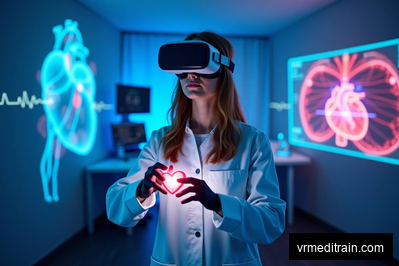
The traditional approach to medical education is undergoing a seismic shift. The integration of Virtual Reality (VR) training into medical school curriculums is transforming how future doctors learn, opening up a realm of possibilities in medical education. This transition is not only redefining pedagogical practices but also revolutionizing the entire healthcare sector.
This blog post delves into the integration of VR in medical education, discusses its potential benefits and challenges, shares insights from industry experts, and presents real-world examples of its application. It aims to provide an extensive overview of how VR is reshaping the learning landscape of medical schools.
Building upon the foundation laid out in the Introduction, it's fascinating to witness how cutting-edge technologies like artificial intelligence are revolutionizing medical education. Imagine medical students having access to interactive simulations that replicate real-life scenarios, allowing them to hone their diagnostic skills in a risk-free environment. This shift towards experiential learning not only enhances student engagement but also better prepares future healthcare professionals for the complexities of modern healthcare. Additionally, the integration of Virtual Reality (VR) and Augmented Reality (AR) tools is bridging the gap between theoretical knowledge and practical application, offering a more immersive and dynamic learning experience. As we delve deeper into this transformative era of medical education, the possibilities seem limitless.
The Role of VR in Medical Education
VR technology allows for immersion into a simulated 3D world that replicates real-life scenarios. In medical education, this technology is used to create a risk-free, controlled environment where students can practice procedures, diagnose diseases, and develop their clinical skills. For instance, The Royal London Hospital’s ground-breaking project, VR in The OR, allows medical students to witness surgeries in virtual reality – a first-of-its-kind initiative in medicine.
In a Journal of Surgical Education study, 83% of surgical residents found VR training valuable to their learning. VR’s capability to offer a hands-on experience without real-world consequences makes it an effective training tool, enhancing medical students' knowledge, skills, and confidence.
One of the key advantages of integrating VR into medical education is its ability to offer hands-on training in a risk-free environment. For instance, medical students can practice complex surgical procedures repeatedly in a virtual setting, gaining valuable experience and confidence before operating on real patients. This not only enhances their technical skills but also improves patient safety by reducing the likelihood of errors during surgeries. Additionally, VR simulations can provide students with exposure to rare medical cases that they may not encounter often in a traditional classroom setting, further broadening their clinical knowledge and problem-solving abilities.
The Pros and Cons of Integrating VR into Medical Curriculums
VR brings numerous benefits to medical education, the foremost being an engaging and immersive learning experience. It offers a safe space for students to make mistakes and learn from them without risking patient safety. Dr. Shafi Ahmed, a pioneer in VR surgery, states, “VR allows us to democratize medical education worldwide.”
However, the integration of VR is not without challenges. VR equipment is costly, and not all institutions may have the resources to implement it. Additionally, the technology might detract from the importance of human interaction in patient care. Balancing VR with traditional teaching methods can address this concern.
One significant advantage of integrating VR into medical curriculums is the enhanced understanding of complex anatomical structures. Students can explore the human body in 3D, allowing for a more in-depth comprehension of intricate systems like the cardiovascular or nervous system. This hands-on approach fosters better retention and recall of information, ultimately improving diagnostic skills and patient care. On the flip side, a potential drawback of VR in medical education is the initial cost of implementing such technology. While the benefits are evident, the investment required for high-quality VR equipment and software may pose a financial challenge for some institutions. Balancing these pros and cons is crucial in determining the overall effectiveness and sustainability of integrating VR into medical curriculums.
Case Studies: VR in Medical Schools
Stanford University's School of Medicine has integrated VR into its curriculum since 2017. Their VR anatomy class has replaced cadaver dissection, providing students with a comprehensive understanding of the human body. Similarly, Case Western Reserve University uses Microsoft’s Holo Lens technology for anatomy and physiology classes, enabling students to interact with 3D holographic images.
Notably, the University of Nebraska Medical Center has invested $119 million in their Interprofessional Experiential Center for Enduring Learning (i EXCEL), which uses VR to train healthcare professionals. These case studies underline the growing acceptance of VR in medical education.
Building on the success of Stanford University's VR integration, the University of California, San Francisco, has also embraced this technology in its medical curriculum. Through VR simulations, UCSF students can now practice complex surgical procedures in a risk-free environment, enhancing their surgical skills and decision-making abilities. This innovative approach not only fosters a deeper understanding of medical concepts but also prepares future healthcare professionals for real-world challenges they may encounter in their careers.
Conclusion
As technology continues to advance, the integration of VR into medical school curriculums is an inevitable and welcomed change. While challenges exist, the potential benefits of VR, such as immersive learning experiences and improved patient safety, far outweigh them. With careful planning, adequate funding, and a balanced approach, VR can redefine medical education and ultimately lead to more competent and confident healthcare professionals.
The future of medical education is here. It is immersive, it is engaging, and it is virtual. By embracing VR, medical schools can redefine traditional pedagogical boundaries and equip the medical professionals of tomorrow with the skills they need to succeed.
In conclusion, the incorporation of virtual reality (VR) technology in medical education opens up a realm of possibilities for enhancing learning experiences. By immersing students in realistic medical scenarios, VR simulations can help bridge the gap between theory and practice, allowing students to develop critical decision-making skills in a safe yet realistic environment. For instance, virtual surgeries enable aspiring surgeons to practice complex procedures repeatedly, refining their techniques and improving patient outcomes in the long run. Moreover, VR can revolutionize the way medical concepts are taught, offering interactive and engaging platforms that cater to diverse learning styles and preferences.