Introduction
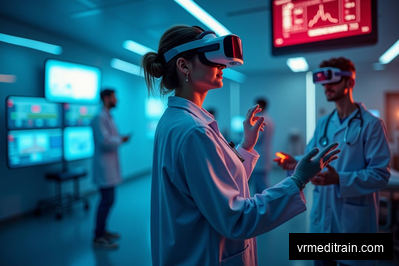
Emergencies are unpredictable, and the response to such circumstances requires a delicate balance of knowledge, skills, and experience. Traditional training methods have provided a foundation, but they often fall short in preparing emergency personnel for the unpredictable nature of crises. Enter Virtual Reality (VR), a technology that's transforming the landscape of emergency response training by providing immersive, realistic and controlled environments. This blog post delves into the profound impact VR is having on emergency response training and what we can anticipate in the future.
In delving deeper into the realm of emergency response, the significance of a thorough introduction becomes even more apparent. Imagine a scenario where a community is faced with a natural disaster like a hurricane. An effective introduction to emergency protocols can serve as the foundation for a comprehensive response plan. By setting the tone and clearly outlining the key procedures at the onset, individuals involved can act swiftly and decisively, potentially saving lives and minimizing damage. Furthermore, an introduction provides a vital opportunity to establish communication channels and assign roles within the response team. Through clear communication, stakeholders can coordinate efforts seamlessly, ensuring that resources are utilized efficiently and that everyone knows their responsibilities. This initial briefing can instill confidence and a sense of preparedness among responders, fostering a cohesive and organized approach to managing the crisis. In essence, the introduction acts as the compass guiding the team through the turbulent waters of an emergency, steering them towards a coordinated and effective response.
Virtual Reality in Emergency Response Training
Virtual Reality provides an avenue for first responders to practice and refine their skills in a safe and controlled environment. VR technology can simulate a wide variety of scenarios - from natural disasters to active shooter situations - providing an immersive training experience that traditional models cannot match. A case study by the Singapore Civil Defense Force (SCDF) showed that their VR training system, RESCUE, increased trainee engagement and knowledge retention by over 70%.
Moreover, VR has the capability to replicate environments and situations that are otherwise challenging to recreate, such as high-rise fires or chemical spills. This adaptability allows for tailored training programs that address specific needs and skill gaps. In the USA, the Los Angeles Fire Department (LAFD) has made significant strides in implementing VR training, focusing on wildfire response. The immersive training has proven instrumental in equipping firefighters with the necessary skills to tackle these complex and high-risk situations.
Virtual Reality simulations are revolutionizing the landscape of emergency response training by offering immersive scenarios that closely mirror real-life crisis situations. Through VR technology, first responders can engage in interactive exercises that challenge their decision-making abilities and enhance their situational awareness. For instance, firefighters can train in simulated burning buildings, where they must navigate through smoke-filled rooms, assess fire hazards, and execute rescue missions, all within a controlled virtual environment. Moreover, Virtual Reality allows emergency personnel to practice coordination and communication skills in high-pressure scenarios. In a VR simulation of a mass casualty incident, paramedics can collaborate with law enforcement officers and firefighters to triage and transport injured individuals efficiently. By experiencing these dynamic simulations, responders can refine their teamwork strategies and adapt to unpredictable challenges that may arise during actual emergencies. The utilization of VR in emergency response training not only improves individual performance but also fosters a culture of collaboration and preparedness among diverse units within the first responder community.
Benefits and Challenges of VR in Emergency Response Training
The benefits of VR in emergency response training are numerous. Firstly, VR provides a risk-free environment for first responders to practice their skills. Mistakes made during a VR simulation do not have real-world consequences, promoting a learning culture that encourages trial and error. Secondly, VR training is cost-effective in the long run. Although the initial investment in VR technology can be significant, the ability to reuse scenarios and equipment can result in considerable savings over time.
Despite these advantages, VR training also has its challenges. The high cost of VR equipment and the development of realistic simulations can be prohibitive for many organizations. Additionally, some users may experience disorientation or motion sickness during VR training. Furthermore, the lack of physical feedback, known as haptic feedback, in VR training can limit the realism of certain scenarios, such as carrying a patient or handling firefighting equipment.
One significant benefit of incorporating VR technology in emergency response training is the ability to simulate complex scenarios that are challenging to replicate in traditional training settings. For instance, VR can create hyper-realistic simulations of natural disasters like earthquakes or wildfires, allowing trainees to experience these events firsthand in a safe and controlled environment. This hands-on experience helps emergency responders develop the necessary skills and decision-making abilities to effectively mitigate the impact of such crises in real-life situations. However, along with these benefits come challenges such as the initial cost of implementing VR training programs and the need for specialized technical expertise to develop and maintain these simulations. Ensuring the seamless integration of VR technology into emergency response training requires ongoing investment in equipment, software updates, and training for personnel to maximize its effectiveness in preparing responders for high-stress and dynamic emergency scenarios.
The Future of VR in Emergency Response Training
As VR technology advances, its application in emergency response training is set to become more widespread and effective. In the future, we can expect VR training to become even more immersive with the integration of haptic feedback. This will allow trainees to physically feel and interact with their virtual environments, dramatically increasing the realism of training scenarios.
Additionally, the use of Artificial Intelligence (AI) is anticipated to revolutionize VR training. AI can analyze trainees' performance in real-time and adapt scenarios to challenge their weaknesses, providing a personalized learning experience. For instance, the U.S. Army is currently developing an AI system named STE (Synthetic Training Environment) that combines VR, AI, and big data to provide soldiers with highly realistic and personalized training experiences.
With the continuous evolution of VR technology, the future of emergency response training is poised to undergo significant enhancements. One exciting development on the horizon is the integration of AI algorithms into VR simulations, allowing for dynamic scenario generation based on real-time data inputs. For instance, VR environments could adapt in response to trainee actions, providing personalized training experiences that mirror the unpredictability of actual emergencies. This level of adaptive learning can better prepare responders for the diverse challenges they may face in the field, fostering quick decision-making skills and enhancing overall preparedness.
Furthermore, advancements in haptic feedback technology are set to revolutionize how emergency response scenarios are simulated in VR. By incorporating realistic touch sensations into training simulations, responders can experience a heightened sense of immersion, improving their ability to assess and respond to critical situations. Imagine a firefighter in a VR simulation feeling the heat of a virtual fire or a medical professional sensing the pulse of a virtual patient. These tactile feedback mechanisms not only enhance the training experience but also contribute to muscle memory development, ultimately leading to more effective and efficient emergency response outcomes.
Conclusion
The future of emergency response training with VR holds much promise. With its capacity to offer realistic, adaptive, and risk-free training experiences, VR is poised to revolutionize the field. While challenges exist, technological advancements in areas such as haptic feedback and AI are expected to mitigate these issues and enhance the effectiveness of VR training. The integration of VR into emergency response training not only equips first responders with better skills but also potentially saves more lives during emergencies. As we embrace this technology, we look forward to a future where emergency response teams are better prepared than ever to face the unpredictable.
As we move forward, it's crucial for organizations to carefully consider the potential benefits and challenges of VR in emergency response training. By doing so, they can make informed decisions on how best to incorporate this groundbreaking technology into their training strategies. The successful implementation of VR in emergency response training will undoubtedly pave the way for a safer, more efficient future in emergency management.
As we draw our conclusions on the potential of VR in emergency response training, it becomes evident that this technology is not just a trend but a transformative tool. Imagine a scenario where first responders can realistically simulate various crisis situations, honing their skills in a safe and controlled environment. From practicing high-stress scenarios like active shooter situations to refining communication and decision-making skills, VR offers a comprehensive training experience that traditional methods simply cannot match. The ability to replicate realistic scenarios with immersive technology can significantly enhance the readiness and effectiveness of emergency responders in the field. Furthermore, the benefits of VR extend beyond training to post-incident analysis and debriefing. Imagine a post-response session where responders can revisit a virtual reconstruction of the incident, allowing for a detailed examination of their actions and decisions. This level of reflective analysis can lead to continuous improvement and refinement of response strategies. By harnessing the power of VR in emergency response training, we are not just looking at a brighter future but a safer one for both responders and the communities they serve.