Introduction
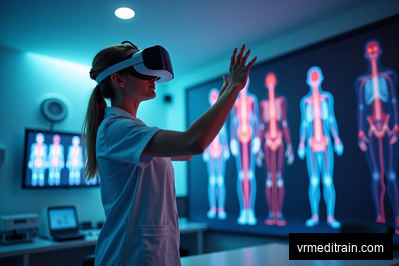
As the healthcare landscape continuously evolves, so does the need for more innovative and efficient training methods for healthcare professionals, particularly nurses. Among the emerging trends in health sector education is the use of Virtual Reality (VR) simulations. VR simulations offer an immersive, interactive, and realistic learning experience that can significantly enhance nursing skills.
This article will delve into how VR simulations can revolutionize nursing education and training, the advantages and potential challenges, and some real-world examples where VR has been successfully implemented in this field.
In this ever-changing healthcare landscape, a strong introduction is crucial to set the stage for what's to come. Introducing readers to the latest advancements in telemedicine, where patients can now receive medical consultations from the comfort of their homes, is a key element. An engaging introduction can highlight how this technology is revolutionizing the way healthcare services are delivered, making it more accessible and convenient for patients of all backgrounds.
Furthermore, a well-crafted introduction can also touch on the importance of personalized medicine, where treatments are tailored to an individual's unique genetic makeup. By discussing how this approach is reshaping traditional healthcare practices and leading to more effective outcomes, readers are drawn into the intricate world of modern healthcare. Setting the tone with a compelling introduction not only captivates the audience but also paves the way for deeper exploration into the innovative solutions driving the industry forward.
The Power of VR in Nursing Education
VR simulations provide a safe and controlled environment where nurses can practice and refine their skills without the risk of harming actual patients. This hands-on experience enables them to make mistakes and learn from them, leading to a deeper understanding and mastery of nursing procedures. A study by the National League for Nursing (NLN) found that 98% of nursing students who used VR simulations felt more confident in their abilities.
Moreover, VR simulations can provide a more comprehensive learning experience by replicating a wide range of scenarios that nurses may encounter in the real world. For instance, at the University of Nebraska Medical Center, students use VR simulations to practice responding to medical emergencies, such as cardiac arrest or trauma, in a realistic yet risk-free environment.
In addition to skill enhancement, the power of VR in nursing education extends to fostering empathy and improving patient outcomes. Virtual reality technology allows nursing students to step into the shoes of patients, experiencing firsthand the challenges and emotions they face. By immersing themselves in these virtual scenarios, students can develop a deeper understanding of patient perspectives, leading to more compassionate and effective care practices. For example, VR simulations can simulate scenarios where patients exhibit varying levels of pain, helping nurses learn to assess and respond to pain cues more effectively.
Advantages and Challenges
The benefits of VR simulations in nursing education are vast. They provide an engaging, immersive, and realistic learning environment where nurses can develop critical thinking, decision-making, and problem-solving skills. Additionally, they offer an opportunity for repeated practice, which is essential for skills mastery. According to a survey by e Campus News, 97% of students said VR made learning more exciting, thereby increasing their motivation to learn and participate.
Despite these benefits, the adoption of VR in nursing education also comes with challenges. High costs of VR equipment and the need for technical expertise can pose barriers for some institutions. Moreover, not all nursing skills can be effectively taught through VR, such as those that require tactile feedback. It's also worth noting that the immersive nature of VR can cause physical discomfort in some users, such as dizziness or nausea.
While VR simulations offer promising advantages in nursing education, they also present unique challenges that educators and institutions must address. One key advantage is the ability for students to practice complex procedures in a safe, controlled environment, enhancing their skills and confidence. However, a major challenge lies in the initial investment required to develop high-quality VR content tailored to nursing curricula. This can be a barrier for smaller programs or institutions with limited resources.
Additionally, another advantage of VR simulations is the opportunity for students to experience diverse patient scenarios, improving their critical thinking and decision-making abilities. On the flip side, ensuring the realism and accuracy of these scenarios poses a challenge in terms of content creation and maintenance. Educators must continuously update and refine the simulations to reflect the latest advancements in healthcare practices. Balancing these advantages with the challenges of cost and content development is crucial in harnessing the full potential of VR technology in nursing education.
Real-World Applications of VR in Nursing Education
Despite the challenges, many healthcare institutions and universities are turning to VR to enhance their nursing education programs. For example, Stanford University's Neurosurgical Simulation and Virtual Reality Center uses VR to train nurses on complex neurosurgical procedures. Similarly, the Children's Hospital Los Angeles created a VR simulation that allows nurses to practice communicating difficult diagnoses to parents.
Another innovative example is the use of VR by the British National Health Service (NHS) to train nurses in the management of sepsis, a life-threatening response to infection. In this simulation, the nurse is immersed in a scenario where they must identify and respond to a septic patient, allowing them to apply theoretical knowledge in a practical, low-risk context.
In the realm of nursing education, VR is revolutionizing the way students learn complex medical procedures. Imagine a virtual simulation where nursing students can practice administering injections, conducting patient assessments, or even handling emergency situations in a realistic yet safe environment. This hands-on approach not only boosts students' confidence but also allows them to make mistakes and learn from them without any real-world consequences. Furthermore, VR enables educators to create customized scenarios that cater to different learning styles, ensuring that each student receives personalized training tailored to their needs.
The Future of VR in Nursing Education
The future of VR in nursing education looks promising. As technology continues to advance, VR simulations will likely become more sophisticated, realistic, and accessible. This will enable a wider range of nursing skills to be taught using VR, making the learning experience even more comprehensive.
Furthermore, the ongoing COVID-19 pandemic has highlighted the importance of remote learning tools, such as VR, in maintaining education continuity when face-to-face training is not possible. As a result, the adoption of VR in nursing education is expected to accelerate in the coming years.
In the evolving landscape of nursing education, the integration of VR technology is poised to revolutionize the way future nurses are trained. Imagine students immersing themselves in realistic scenarios within a virtual hospital setting, where they can practice critical decision-making skills and procedures in a safe yet lifelike environment. This hands-on approach not only enhances their technical competencies but also nurtures their ability to think quickly and effectively in high-pressure situations, mirroring the real challenges they will face in their nursing careers.
Furthermore, the adaptability of VR allows educators to tailor simulations to meet specific learning objectives, catering to individual student needs and providing personalized feedback for improvement. By incorporating VR simulations into the curriculum, nursing schools can ensure that graduates are better prepared to handle diverse patient cases and emergencies with confidence and proficiency. As VR technology continues to advance, the future of nursing education holds immense potential for fostering a new generation of skilled and empathetic healthcare professionals.
Conclusion
In conclusion, virtual reality simulations offer a compelling tool for enhancing nursing skills. They provide a safe, immersive, and engaging learning environment where nurses can practice a wide range of scenarios and develop critical skills. Despite the challenges, the success stories and the potential benefits make a compelling case for the wider adoption of VR in nursing education.
As we look to the future, healthcare institutions should continue to explore the potential of VR technology and consider how it can be integrated into their training programs to enhance the preparation and competence of future nurses. In the end, this will lead to better patient care, improved health outcomes, and a stronger healthcare system.
Expanding on the conclusion, it is evident that the integration of virtual reality simulations in nursing education not only enhances technical skills but also fosters critical thinking and decision-making abilities. By immersing students in realistic scenarios, such as emergency room simulations or complex patient interactions, these tools provide a safe space for learners to practice and refine their clinical judgment. Moreover, virtual reality enables educators to tailor scenarios to meet specific learning objectives, ensuring that students are exposed to a wide range of clinical challenges and scenarios.
Furthermore, the use of virtual reality simulations in nursing education can also improve student engagement and motivation. The interactive nature of these simulations appeals to the digital-native generation of learners, making the learning process more dynamic and stimulating. As a result, students are more likely to be actively involved in their education, leading to better retention of knowledge and skills. In conclusion, the continued integration of virtual reality simulations in nursing programs holds great promise for preparing future nurses who are not only proficient in technical skills but also adept at critical thinking and decision-making in diverse clinical settings.